When did Britannia first appear?
The general view is that the female figure first appeared on a coins issued by the Roman Emperor, Hadrian. Britannia was the name of the Roman province of England and the country is represented by a female figure carrying a downward-pointing spear with the right hand raised and seated on a pile of stones, a shield is tucked behind. Hadrian had coins minted naming the various Roman provinces he visited, all with female figures on the reverse. These are examples of the base unit coin, the bronze As.


The figure became more formal carrying a Roman military standard on coins of the next emperor, Antoninus Pius. Britannia continued to appear intermittently on Roman coins throughout the Roman occupation of Britain until Roman coins ceased to be used.
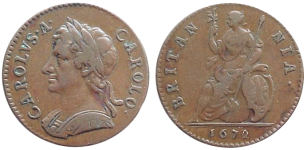
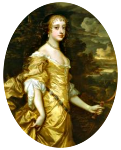
Modern coins first showed Britannia in 1672, on the copper farthing of King Charles II. His mistress, Frances Teresa Stewart, who became Duchess of Richmond, may have been the model for this figure.
On the penny, Britannia evolved from the George III ‘cartwheel’ penny of 1797 engraved by Conrad Heinrich Küchler to William Wyon’s 1825 picture and to the 1860 bronze coin redesigned and engraved by his son, Leonard Charles Wyon. Over the years, the Royal Mint decided to give Britannia maritime accoutrements including a trident. The Graeco-Roman style helmet hearks back to Solly’s beautiful banknote portrait of 1818. The last Britannia penny was minted in 1970.

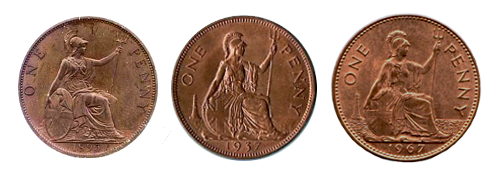
If you detect a slight superiority in the 1895 design (bottom left), it was the work of George William de Saulles, creator of this beautiful 1902 silver florin for Edward VII.

The first decimal 50p was minted in 1969 as New Pence which in 1982 was changed to Fifty Pence. In 1997 the coin was made smller and lighter.

The last circulating coin with Britannia may be the decimal 50p of 2008 because,following a complete coin design revamp in 2009, a jigsaw of coins was produced with value numbers, which had been a useful addition, being removed.
A striking modern design by Phillip Nathan depicts Britannia as a standing figure on a gold coin. His silver Britannia design to me is less stylish, the figure looks more like Boudicca and the chariot is the the main subject.


When was the Britannia coin issued?
Gold ‘Britannias’ were first minted in 1987
in 22 carat (.917) gold. There are 1 ounce, 1/2 oz., 1/4 oz. and 1/10 oz. coins (nominally £100, £50, £25 and £10). (1 Troy ounce = 31.1035 grams). Only the 1oz. Britannia is usually used for bullion together with the gold sovereign which has 0.2352oz (7.315 g) of actual gold content. Silver Britannias, working down from 1oz (nominally £2) to a tenth of an ounce (20p), were first minted in 1997 but always in sets at a premium price so are not usually used for bullion. The material used
for silver britannias is known as ‘britannia silver’ or ‘958 fine silver’. It is 95.84% silver with 4.16% copper compared with 7.5% copper in ‘sterling silver’ (.925 fine) which was approved for use by siversmiths from June 1720. Britannia silver was the mandatory composition for silver coins in England from 1697 to 1720 so there would be less incentive to melt down coins to create other silverware. At the end of 2025 a 1oz Gold Britannia is worth around £4,000.
